
Bangkok
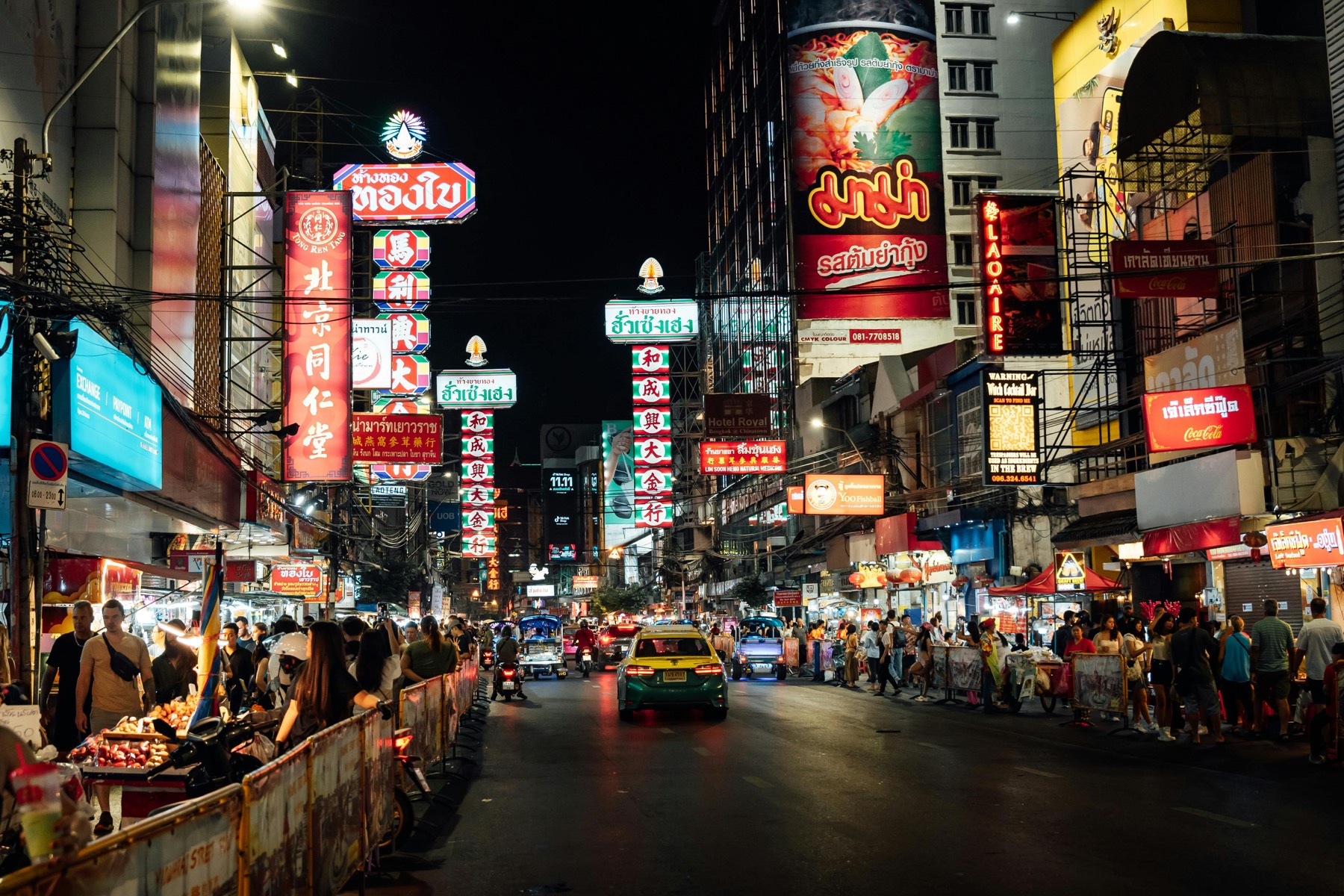
Bangkok is a city of contrasts, and the contrast is not a slogan — gold-roofed temples on one bank of the river, a skyline of towers on the other, and a street-food stall outside a Michelin-starred restaurant. It is large enough that the district you are in decides what kind of day you have, and well enough connected that changing district costs you fifteen minutes. This page is the overview; each part of it has a page of its own.
The shape of the city
The Chao Phraya River cuts through Bangkok from north to south, and almost everything worth finding sits in relation to it. The old city, with the palace and the great temples, is on the east bank. Chinatown sits just south of it. Silom and Sathorn form the business district below that, Siam is the shopping centre in the middle, and Sukhumvit runs east from there for a very long way. Ari is north, quieter and more residential.
Getting around
The BTS Skytrain and the MRT subway are how the city actually works. Bangkok traffic is genuinely bad, and a journey that takes fifteen minutes on the train can take an hour in a taxi at the wrong time of day. The river boats are the third option and the most pleasant one, and for the old city they are often the fastest as well. Plan around the lines rather than around the map.
The old city
The Grand Palace, which once housed the royal family, and Wat Phra Kaew inside its grounds, home to the Emerald Buddha. Wat Pho nearby, with the enormous Reclining Buddha and the traditional massage school attached to it. And Wat Arun across the water, which is worth crossing the river for and is best at the end of the day. Dress modestly — covered shoulders and knees — or you will be turned away at the gate.
The river
The Chao Phraya is not scenery you look at from a distance; it is a working waterway with boats you can get on. A river cruise or a long-tail boat gives you the city from the angle it was built along, passing temples, warehouses and towers in the same half-hour. Asiatique, at the southern end, turns the riverside into an evening out.
Eating
Bangkok is the best eating city in Thailand and it is not close. Yaowarat, the Chinatown street, is the obvious place to start, and it gets better after dark. Sukhumvit covers both ends of the range — international restaurants on one soi, street food on another. Ari is where to go for the version of all this that locals kept for themselves.
Markets
Chatuchak at the weekend, which is one of the largest markets in the world and takes as long as you give it. Talad Rot Fai for vintage and for food, at night. And Pak Khlong Talad, the flower market, which never closes and is at its best very early in the morning, before the city has started.
Nights
The rooftop bars are the ones Bangkok is famous for, and they earn it. Below them, Sukhumvit Soi 11 is the clubbing centre, Silom holds the stylish and the hidden, RCA is where the crowd is youngest, Khao San is the backpacker end, and Thonglor is where the city goes when it wants somewhere quieter and more expensive.
Staying
Sukhumvit for nightlife and for the train, Siam for shopping, the Riverside for quiet and for views, Silom and Sathorn for business and for Lumphini Park. November to February is the dry season and the busy one; book ahead in those months.